Bingo Home Design: Live Bingo!
- 4.8
- Rating
- 1.00M
- Installs
- Free
- Price

 Analysis by App-foxy
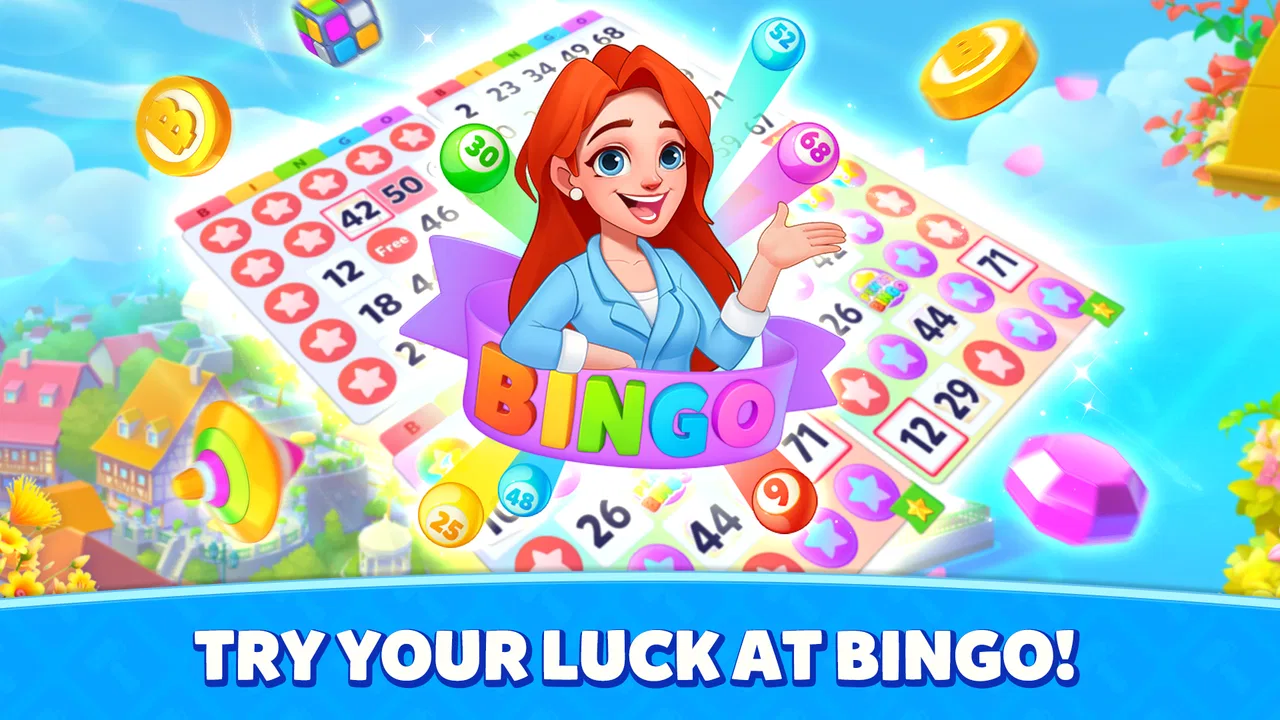
I approached Bingo Home Design: Live Bingo! as a casual board game for short breaks rather than as a serious competitive title. Its central appeal is easy to understand: you play bingo, collect the momentum of successive rounds, and use that activity as the basis for a home-design experience. That combination gives the game a softer, more relaxed identity than a plain digital bingo card.
My first impression is that it is aimed at people who enjoy familiar rules with a light sense of progress around them. You do not need to learn a complicated strategy system before starting, and the Everyone age rating makes it suitable for a broad audience. The game is free to install, although optional purchases range from small amounts to considerably larger per-item prices, so I would keep that in mind before settling into longer sessions.
How the game feels in everyday use
The strongest part of the design is the way bingo gives each session a clear beginning and end. I can imagine opening it while waiting for an appointment, playing during a quiet commute when it is safe to do so, or fitting in a few rounds after dinner. A traditional bingo app may stop at marking numbers, while this one gives the activity a decorative goal as well. That extra layer can make repeated rounds feel more purposeful.
You May Also Like

 Blood Strike: 2.5 Anniversary
Blood Strike’s Loadouts Turn Every Drop Into a Tactical Gamble
A close look at Blood Strike’s custom loadouts: how fast access to signature weapons reshapes its battle royale rhythm, rewards preparation, and narrows the gap between fights.

 Pandora - Music & Podcasts
Pandora’s Music Is Easy to Start, but Harder to Recover
Pandora’s strength is its low-effort path from a seed to a station. Its weak spot is how much confidence it asks you to place in connection, setup, and quiet recovery.

 8 Ball Pool
 Is Built on Rivalries, Rematches, and Routine
A close look at the rivalries, rematches, shared routines, and unanswered safety questions that turn a quick pool match into a persistent mobile community.

 Samsung Music
’s Quiet Strength Is Playing What You Already Own
Its reach comes less from spectacle than from dependable access to a personal library. That simplicity is both the app’s strongest retention engine and its ceiling.

 AccuWeather: Weather Radar
AccuWeather Review: A Quick, Clear Forecast for Everyday Decisions
For everyday plans, the best forecast is the one you can understand quickly. AccuWeather makes rain timing, radar, and local conditions easy to act on, with a few trade-offs.

 Hill Climb Racing
Why Hill Climb Racing Still Turns Crashes Into One More Run
A tiny car, a bumpy hill and one more upgrade: Hill Climb Racing keeps resurfacing because its simple chaos makes every near-miss feel personal.
More From Our News Desk



At the same time, the home-design element changes what I expect from the game. I am not looking only for fast number recognition; I also want the rewards from a round to feel connected to visible progress. That makes the experience more appealing to players who like decorating and collection loops, but less compelling to someone who wants a stripped-down bingo tool with no surrounding progression.
Speed expectations before a long session
Because the game is built around individual bingo rounds, its perceived speed depends less on complex controls and more on how quickly I can move from one decision to the next. The basic interaction should feel approachable for touch-screen players, and the board-game format naturally supports a measured pace. I would not choose it expecting an action-game rush. Its pleasure comes from watching a card develop and deciding how actively to continue.
Short sessions are where the format makes the most sense. If I have only a few minutes, I can focus on a single round instead of committing to a large campaign. For longer play, the design rewards a different rhythm: play several rounds, use the resulting progress on the home side, then stop before the repeated calls begin to feel routine. That self-imposed pacing is useful because bingo can become repetitive when every session is approached in exactly the same way.
One practical tip is to treat the design progression as a reason to return, not as a reason to rush. Trying to push through every available round can make the game feel slower, even when the underlying interaction is perfectly comfortable. I found the experience easier to enjoy when I viewed each round as a small task and the home improvements as a gradual reward.
What happens during heavier play
The demanding moments are likely to come from extended play rather than from a single bingo card. A long session means repeated board updates, frequent visual changes, and continued attention to the game’s reward flow. On a newer phone or tablet, that kind of use should be a reasonable test of general responsiveness. On an older device, I would be more cautious about expecting the same smoothness after playing for a long time.
This matters especially for people who like leaving games open while multitasking. If I switch away to answer a message, check a calendar, or take a call, I would return to the app rather than assume the game will remain active indefinitely. Mobile operating systems can reclaim resources from background apps, and a bingo session is not worth risking frustration over. My preferred workflow would be to finish a round before leaving the game, then reopen it when I am ready to continue.
Another useful habit is to avoid judging the game from one unusually busy session. A brief pause during a transition does not necessarily mean the whole experience is unstable. I would first close other demanding apps, restart the game, and try a shorter round. That simple test separates a temporary device-load issue from a problem that appears consistently inside Bingo Home Design: Live Bingo! itself.
Stability and recovering after interruptions
Reliability is especially important in a game where progress is earned in small steps. I am more forgiving of a modest delay than of losing the result of a completed round. For that reason, I would make a habit of allowing each round to finish cleanly before switching apps or locking the screen. It is a small adjustment, but it gives the game and the phone a better chance to register the latest progress.
If the app ever closes unexpectedly, my recovery process would be straightforward: reopen it, check whether the last completed action was retained, and avoid immediately repeating purchases or tapping through several screens. That is sensible practice for any free-to-play game, particularly one that includes optional transactions. I would also make sure the device has enough free storage and that the operating system is supported before deciding that a problem is specific to the game.
The title comes from ELESTORM(SINGAPORE), and the current version is 1.3.6. Those details matter when troubleshooting because support and behavior can change between releases. If I were helping a friend with an issue, I would first compare the installed version with the current one shown in the app store, then restart the device and test again. I would not keep tapping through a broken screen or attempt a purchase repeatedly while the app appears unresponsive.
There is also a difference between a game being dependable for occasional use and being ideal for constant background play. Bingo Home Design: Live Bingo! suits active, intentional sessions better than passive use. I would open it, play, finish a natural stopping point, and close it. That approach reduces the chance of returning from another app to a stale session and also helps keep the game from becoming a drain on attention.
Device limits and practical expectations
The minimum operating-system requirement is Android 6.0, which gives the game a broad potential device range. Still, an operating-system requirement does not guarantee identical performance on every phone. Hardware age, available memory, storage space, screen size, and the number of other apps running at the same time can all affect how comfortable a game feels.
On a compact phone, bingo boards and decorative elements may feel more crowded than they would on a larger screen. That does not make the game unusable, but it can affect how quickly I spot the relevant number or understand a new design step. Players with weaker eyesight may prefer a larger display, while people who mainly play one-handed may appreciate the convenience of a smaller device. The best choice depends on whether board readability or portability matters more.
Resource demands are also worth considering because this is more than a static bingo card. The home-design presentation adds visual content around the core board. I would therefore avoid assuming that an older Android phone will deliver the same responsiveness as a recent device simply because both meet the minimum system requirement. Keeping storage comfortably available, closing unused apps, and avoiding very long sessions on a warm device are sensible ways to reduce friction.
For tablets, the larger screen could make the decorative side easier to appreciate and the bingo board less cramped. The trade-off is that a tablet is less convenient for spontaneous play. I see the phone as the better fit for quick rounds and the tablet as the more comfortable option for players who want to spend time with the home-design progression.
Free entry, optional spending, and pacing
The free price makes it easy to test the game without committing money at the start. That is a real advantage for casual players who are unsure whether the blend of bingo and decorating will hold their interest. I would play several sessions first and decide whether the normal progression feels satisfying before considering any optional purchase.
In-app purchases are listed from $0.99 to $199.99 per item. That is a wide range, so I would approach the shop carefully and avoid treating a visible offer as part of the basic cost of playing. A useful personal rule is to decide on a spending limit before opening purchase screens, especially if the game’s progression makes you want to finish a room immediately.
This is one of the clearest trade-offs in the experience. The free entry supports experimentation, while optional spending can change how quickly someone advances. Players who enjoy earning progress slowly may find the natural pace more rewarding. Players who dislike any temptation to accelerate a game should skip the purchase side entirely or choose a simpler bingo app with fewer surrounding progression pressures.
How it compares with ordinary bingo alternatives
Compared with a basic bingo application, this game offers more context around each round. The home-design layer gives me a reason to care about what happens after the card is completed, and it can make the familiar format feel less like a standalone number-calling exercise. That is the main reason I would recommend it over a minimal bingo app to someone who enjoys decoration and gradual visual change.
A plain bingo alternative is still better for a player who wants the quickest possible route into a card, the least distraction, and no interest in decorating. It may also be preferable for older devices or for people who want to conserve attention during very short sessions. Bingo Home Design: Live Bingo! asks me to engage with a broader loop, so its extra appeal comes with extra screens, extra decisions, and a greater chance that the surrounding progression matters as much as the bingo itself.
It also differs from competitive board games. I would not choose it when I want deep head-to-head strategy, a strong social tournament atmosphere, or a board that changes dramatically from one match to the next. Its appeal is gentler: familiar bingo, a collection-oriented reason to continue, and a home to shape over time. Knowing that distinction prevents disappointment.
Who will get the most from it
I think the best audience is someone who already likes bingo but wants a little more purpose around each round. It is also a reasonable choice for casual players who enjoy decorating themes, steady progress, and games that can be opened for a short break. Families may appreciate the Everyone rating, although I would still supervise purchases on a shared device because the available transaction range is substantial.
It is less suitable for someone who needs a completely offline-feeling experience, wants a minimalist interface, or becomes frustrated by any form of repeated play. I would also point competitive players toward a more strategic board game. The title is not trying to replace a serious tabletop match; it is designed around accessible bingo and the satisfaction of improving a virtual home.
One realistic scenario is a player who has fifteen quiet minutes before bed. I would play one or two rounds, use the earned progress on a home task if the session naturally reaches that point, and stop there. The game works well in that situation because the basic activity is easy to understand and does not require a large block of uninterrupted time. If I had an hour and wanted varied strategy, I would choose a deeper board game instead.
My performance verdict
After weighing speed, heavier-use behavior, recovery habits, and device limits, I see Bingo Home Design: Live Bingo! as a comfortable casual game rather than a performance showcase. Its structure does not demand rapid reflexes, but the added home-design presentation means device age and session length can still affect how polished it feels. I would expect the best experience from a reasonably maintained phone or tablet, with other demanding apps closed during longer play.
The game has earned a 4.9 average from around 30 thousand ratings and has passed over a million installs, which suggests that its accessible formula has found a substantial audience. Those figures do not remove the need for personal testing, but they do make it easier for me to recommend trying the free version. The developer’s broad audience choice also fits the simple entry point.
My advice is to install it if you want relaxed bingo with a visible decorating goal, and to begin with short sessions. Check how your device handles the visual progression, decide whether the natural pace feels rewarding, and set a purchase boundary before exploring optional items. If the game feels too repetitive or too busy, a basic bingo app will probably suit you better.
For me, the winning idea is not speed; it is the small sense of completion that comes from turning a familiar board-game activity into gradual home progress. The limitations are equally clear: repetition, optional spending pressure, and performance that may vary across older hardware. Within those boundaries, I would recommend it to a friend who wants an approachable board game for everyday breaks, especially someone who finds a little decorating motivation more engaging than bingo alone.
FAQs for Bingo Home Design: Live Bingo!
01What is Bingo Home Design: Live Bingo!?
Bingo Home Design: Live Bingo! is an engaging mobile game that combines classic bingo with home design elements. Players can enjoy fun bingo sessions while earning rewards to decorate and renovate virtual homes. It's a unique mix of gaming and creativity that appeals to fans of both genres.
02Is Bingo Home Design: Live Bingo! free to play?
Yes, Bingo Home Design: Live Bingo! is free to download and play. However, the game offers in-app purchases that allow players to buy additional items or currency to enhance their experience. These purchases are optional, and players can enjoy the game without spending money.
03What are the system requirements for Bingo Home Design: Live Bingo!?
Bingo Home Design: Live Bingo! is available on both Android and iOS platforms. For Android users, a device running Android 5.0 or higher is recommended. iOS users should have a device running iOS 10.0 or later. Ensuring your device meets these requirements will provide the best gaming experience.
04Does Bingo Home Design: Live Bingo! require an internet connection?
Yes, Bingo Home Design: Live Bingo! requires an active internet connection to play. This is because the game features live bingo sessions and real-time updates. A stable internet connection ensures smooth gameplay and the ability to access all of the game’s features and events.
05Can I play Bingo Home Design: Live Bingo! with friends?
While Bingo Home Design: Live Bingo! primarily focuses on single-player experience, it includes social features that allow interaction with friends. Players can connect with friends, compete on leaderboards, and share their home designs. These features enhance the social aspect of the game, adding more fun to the experience.
Pros
- Engaging gameplay with design elements.
- Variety of bingo rooms to explore.
- Daily challenges keep it fresh.
- User-friendly interface and controls.
- Regular updates with new content.
Cons
- Requires constant internet connection.
- In-app purchases can be pricey.
- Ads can be intrusive at times.
- Requires a lot of device storage.
- Limited offline play options.

Bingo Home Design: Live Bingo!
Gallery